
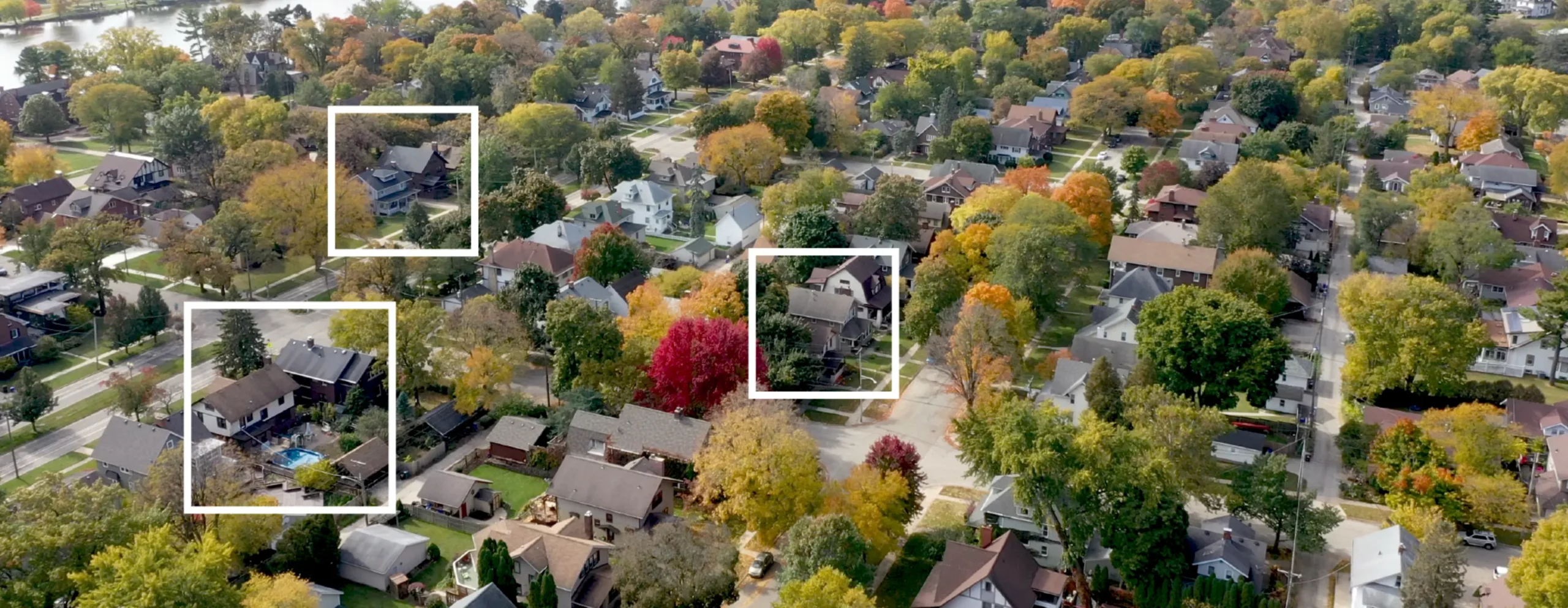
A Deeper Look into Rockford’s Housing Gap
When PlatFORM Group released Episode 1 of A Home for All, “The Housing Gap,” we knew the topic would resonate. What we didn’t fully anticipate was the level of engagement.
The response has been thoughtful, urgent and, at times, deeply personal. Viewers reached out with questions about the numbers. About what “6,000 to 9,000 units” really means. About why Rockford — recently named one of the hottest housing markets in the country — can simultaneously face a housing crisis. This post is our effort to answer some of those questions.
The film was designed to introduce the scale of the challenge. But like any short chapter, it could only hold so much. Here, we want to deepen the context and share additional data and perspectives. If you haven’t viewed the video yet, watch it now.
The Paradox: “Hottest Market” and Housing Crisis
Rockford has been named the hottest housing market in the nation — not once, but twice. That headline sounds like success. And in many ways, it is. But success without supply creates pressure.
Being named Wall Street’s hottest real estate market has been both a blessing and a curse. We’re getting attraction from people outside our marketplace, but the curse of that is they’re driving our prices up.
Rockford has long been known as an affordable community, especially compared to Chicago or coastal metros. But affordability is always relative to local incomes. When housing prices rise faster than wages, affordability erodes — even in a historically low-cost market.
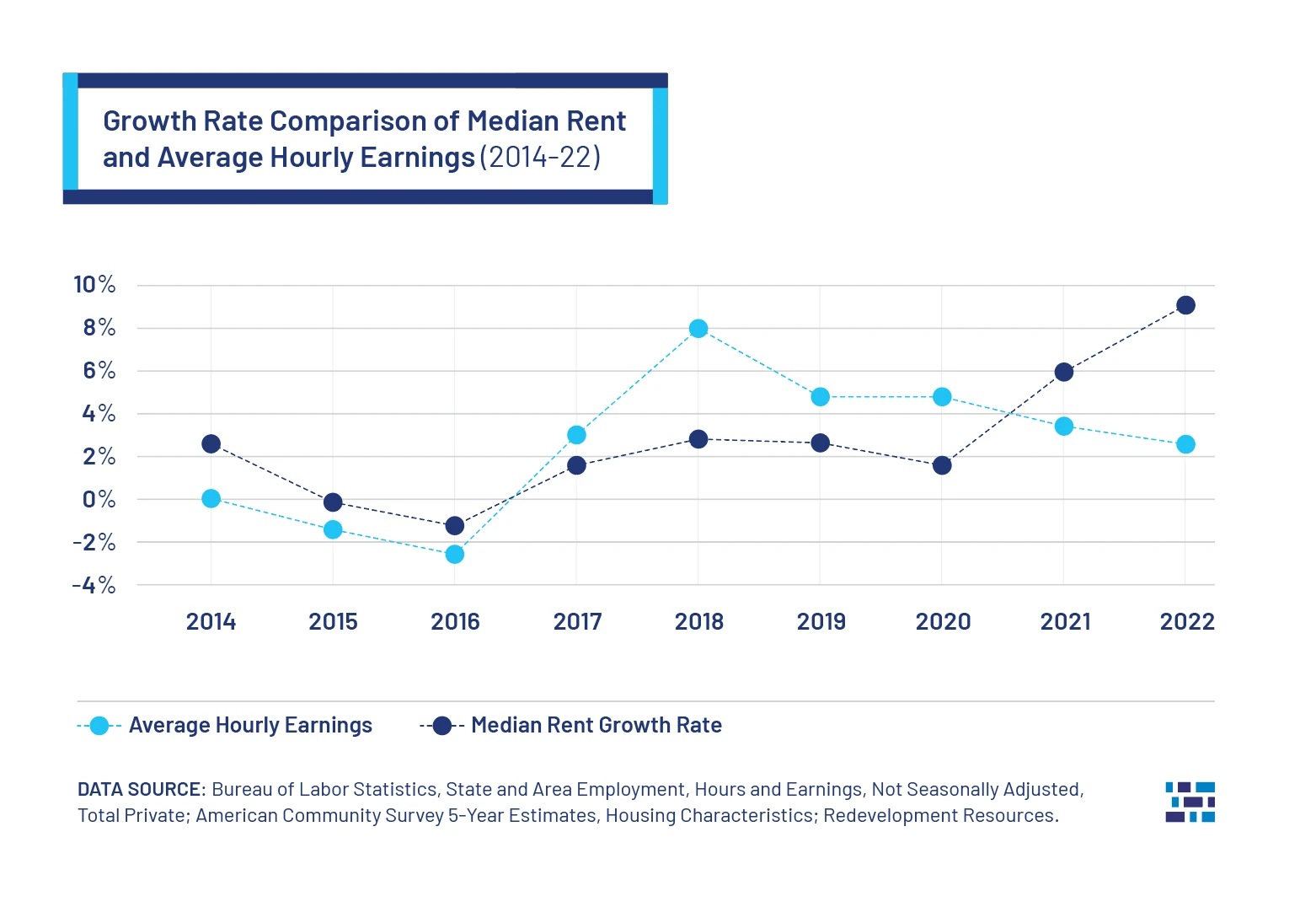
The data show clearly what many residents already feel: housing costs have climbed faster than wages. That pressure is not evenly distributed. It falls hardest on working people — teachers, nursing assistants, retail workers, tradespeople, hospitality workers — the backbone of any functioning city.
“We have individuals from more unaffordable markets that are coming into Rockford, and it makes it harder for Rockfordians to compete in the market,” says Neely Erickson, Government Affairs Director for Illinois REALTORS®, “We have to be intentional to build housing for the workforce that we have — housing that meets their income and what they are able to afford.”
This story isn’t simply about housing, construction and real estate. It’s about whether we can enable access to an adequate supply of essential infrastructure for our workforce.
What Does “6,000–9,000 Units” Actually Mean?
Several viewers asked where the number comes from — and how serious it is. In 2023/4, the City of Rockford released the Housing Needs Assessment and Market Study, which projected the housing demand for the next decade (ending in 2033) from 3,200 to 9,100 units required. The Assessment is a well-measured, reasoned diagnosis of the region’s projected demand and implies a shortfall, assuming current rates of construction and preservation. The City of Rockford expressed a solution in the Housing Strategy Framework, which set a goal to “create or preserve” between 6,000 and 9,000 new housing units by 2035 to meet anticipated demand.
To understand that number, context matters. In the booming postwar years, the Rockford metro regularly authorized roughly 1,700 to 2,400 housing units per year during peak industrial expansion. While the 1960s economy was structurally different, the scale of production demonstrates that this region has previously built at levels far beyond today’s output.
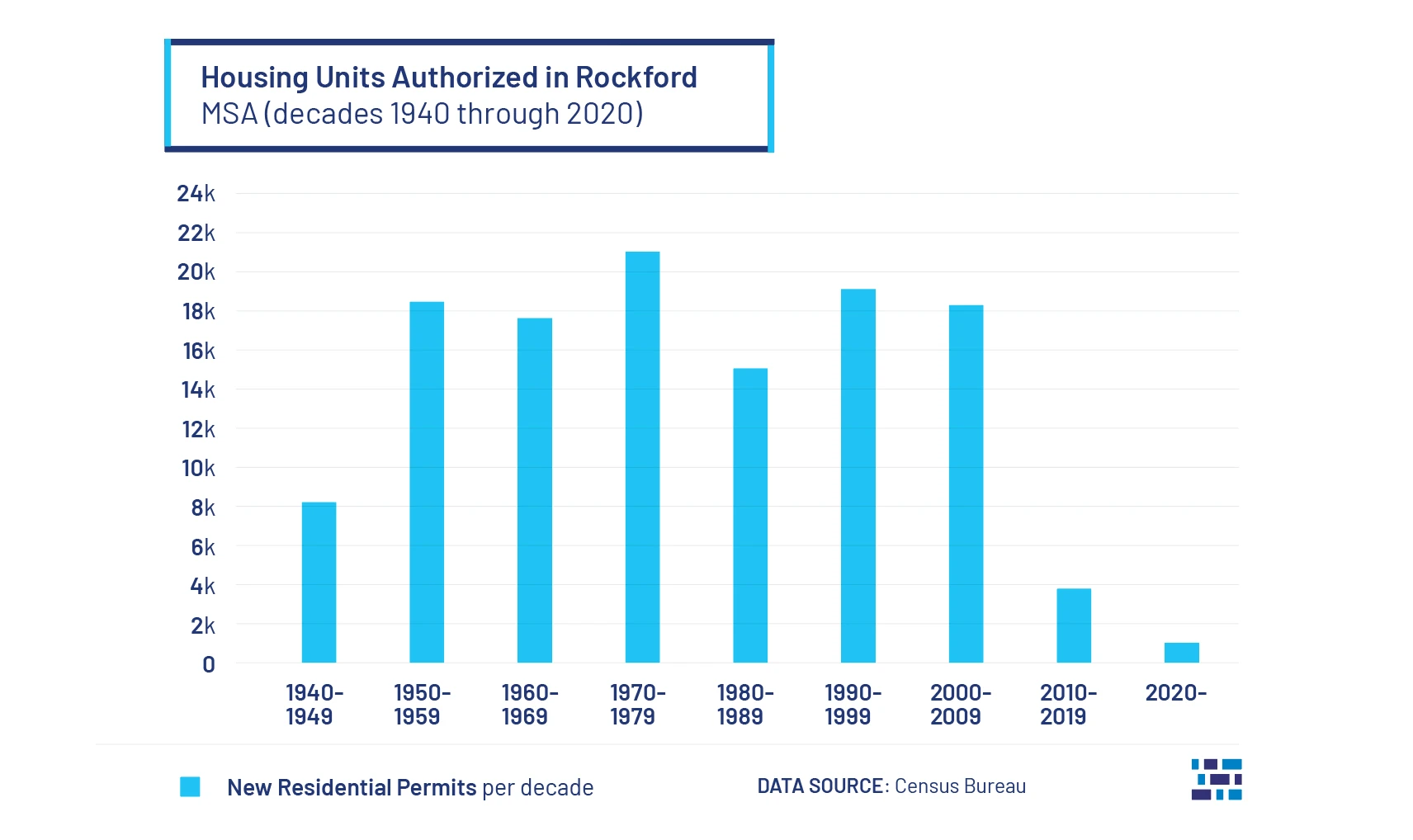
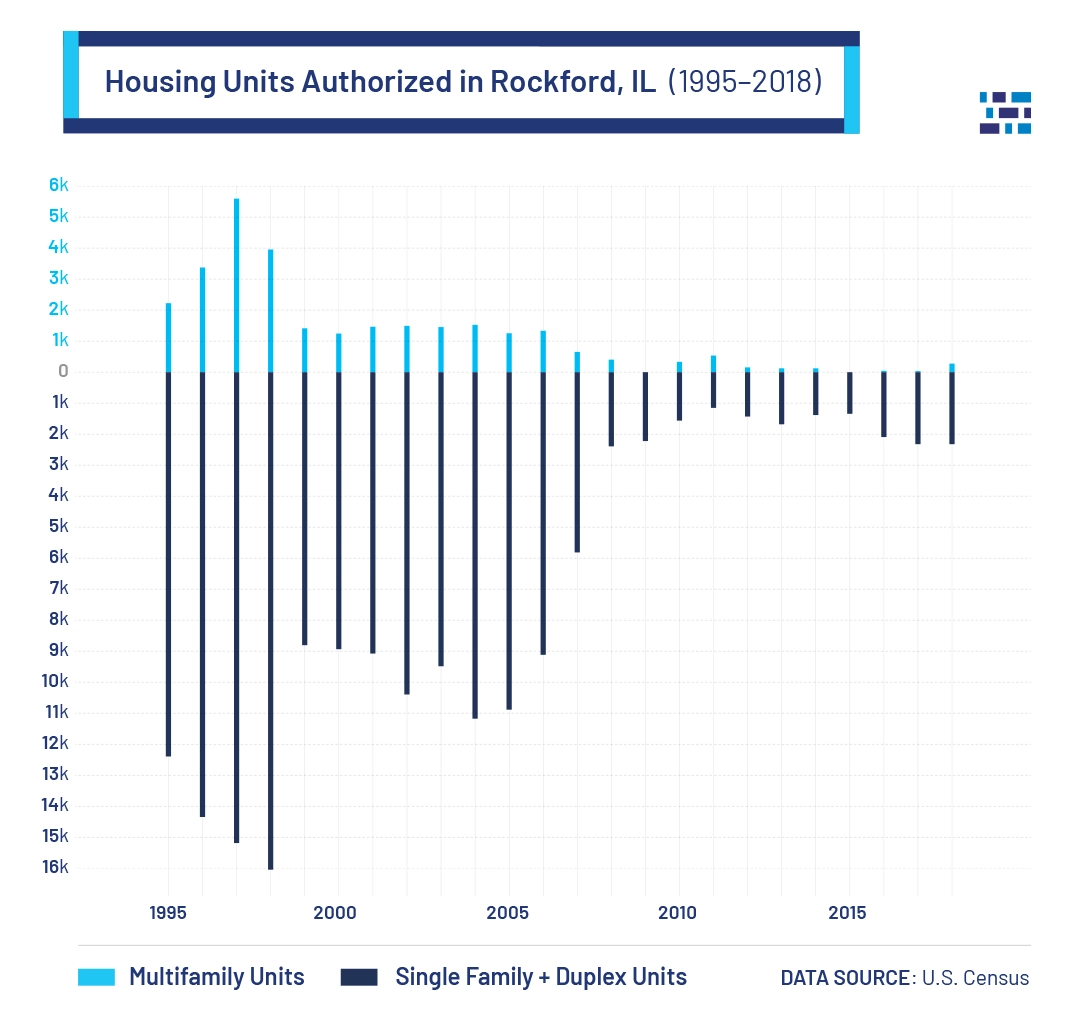
In the 1990s, according to records kept by the federal department of Housing and Urban Development (HUD), annual production often ranged between 1,500 and 2,100 units. This quantity included substantial multifamily developments, not just new single-family homes and duplexes.
The 2008 financial crisis hit Rockford hard enough that, in 2013, the Wall Street Journal named the city “the underwater mortgage capital of the world”. In the ensuing decade-plus, property values have dramatically risen, boasting a 56% increase from 2017 to 2025. Despite the negative effects of increasing property values and home prices to affordability, this increase is a boon to existing property owners and property tax-dependent governing bodies and services.
However, in the fallout of the 2008 crisis, the Rockford region’s new housing construction rate cratered, with annual production falling to roughly 150 to 300 units per year – a fraction of the target set by the City’s Housing Strategy Framework. The gap between historic production and recent output is striking.
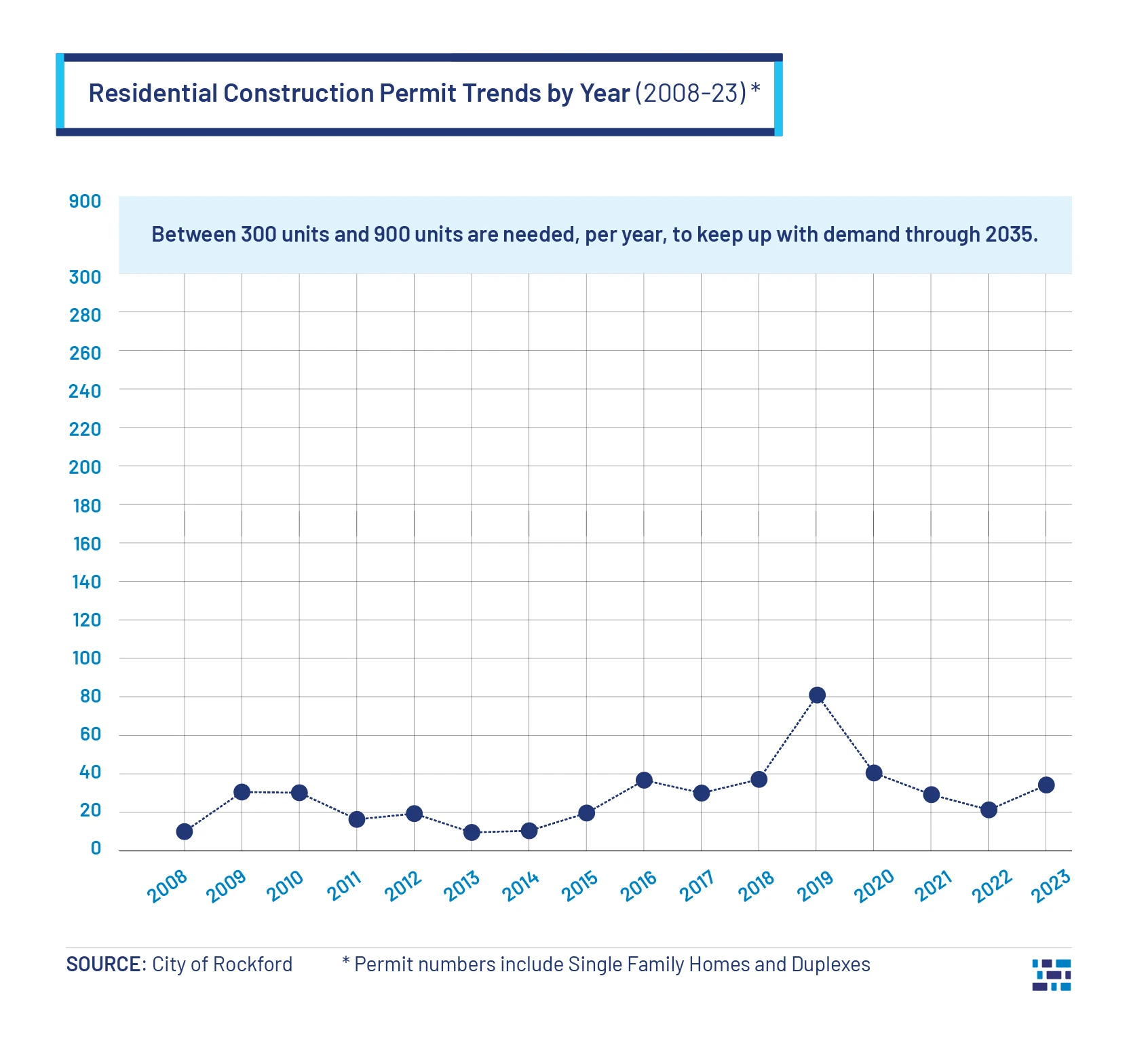
The target of 6,000 – 9,000 housing units constructed or preserved in a decade is not unprecedented expansion. It is a return to something closer to “normal” — given contemporary local, regional and national economic conditions. In fact, the City’s stated target is met simply by matching the housing construction rate seen in the ten year period from 1995 to 2005.
Why Haven’t We Built Enough Housing in the Rockford Region?
If demand is strong, why hasn’t supply responded?
The answer is structural.
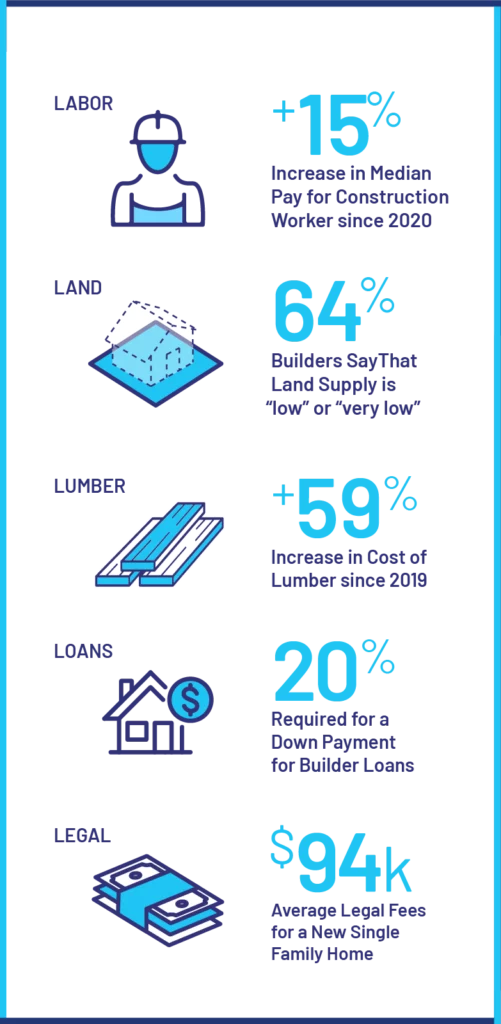
Construction costs have risen dramatically. Developers often refer to the “five Ls” driving cost pressures: Labor, Land, Lumber, Loans and Legal. A recent New York Times article details the factors increasing the cost of the five Ls, detailed in the accompanying graphic.
There’s also an appraisal gap. In many cases, the cost to build a new home exceeds what the market will support on paper. Even when buyers want new construction, if the property doesn’t appraise at cost, lenders won’t finance the purchase.
According to Frank Wehrstein: “Even when buyers love a brand-new home, if it doesn’t appraise, their loan won’t allow them to buy it. Their emotions may put them in that house, but if the numbers don’t work on paper, they end up in an existing home instead.”
Additionally, resistance to density has virtually eradicated major multifamily new construction, which was a significant source of new housing units for Rockford in the 1990s and early 2000s. The reasons for this decrease are multifaceted, including zoning changes and the rise of NIMBYism, and we will discuss them in a later video chapter and article.
All of this adds up to some bad results. Stalled subdivisions. Limited entry-level inventory. Intense competition for existing homes. In some cases, more real estate agents than homes for sale. An active market with relatively little available and affordable supply.
Why This Matters Beyond Housing
One of the most important themes in the film is that housing is not simply a social service. It is economic development.
I always say that housing is economic development because economic development creates jobs. Jobs need workers, and workers need housing. Housing access and stability enables a thriving community.
The broader Rockford community says it wants people to move here — to work here, invest here and raise families here. But new jobs and new residents require housing. Without sufficient supply, growth turns into scarcity. When a community attracts demand without building homes, it doesn’t accelerate progress — it strains it.
When families spend more than 30% of their income on housing, they are considered housing-burdened. That strain shows up elsewhere — in healthcare decisions, education outcomes, savings rates and long-term stability.
Housing shapes opportunity. If workers cannot afford to live where they work, businesses struggle to recruit and retain talent. If young families cannot find starter homes, they delay putting down roots. If seniors cannot downsize within their own community, turnover slows and inventory tightens further.
This is not a narrow issue. It touches every system in a city.
What Happens If We Don’t Act?
Rockford is at an inflection point. Momentum has built in recent years — renewed civic pride, investment downtown, regional recognition. But momentum without housing supply is fragile. Growth without inventory becomes displacement. Headlines without units become frustration.
The sky’s the limit if we get it right. If we don’t get it right, I feel like this opportunity that we see to rebrand ourselves as a community will be a fleeting thought.
The question is not whether Rockford is desirable. The question is whether we will build enough housing to sustain the growth we say we want. PlatFORM Group will continue exploring these themes in upcoming chapters: barriers to building, financing complexity, neighborhood resistance, the human cost of inaction — and models and solutions that work.
This article has focused on a lot of negatives: the gaps, barriers and blind spots that have put the Rockford region in this pivotal position. As an affordable housing advocate and developer, the PlatFORM Group aims to tackle these challenges.
But we are far from alone. Institutions like the City of Rockford, R1 Planning & the Northern Illinois Land Bank, and the State of Illinois are addressing the issue. Additionally, like-minded citizens have formed Rockford Area YIMBY (“Yes In My Backyard”).
We’d like to leave you on a positive note, so please watch this video from the City of Rockford featuring Mayor Tom McNamara, Director of Community & Economic Development Sarah Leys, and Neely Erickson of Illinois REALTORS® for a discussion detailing recent wins and potential solutions.
If you’ve reached out with questions, thank you. Keep them coming. This conversation belongs to the entire community. Rockford has weathered decades of economic change. The next chapter depends on whether we build.
Sources
- The Wall Street Journal. “Rockford Is Now America’s Top Housing Market After an Improbable Turnaround.” April 25, 2024. Article. https://www.wsj.com/real-estate/rockford-illinois-housing-market-rankings-realtor-d304570c
- City of Rockford (IL). Housing Needs Analysis and Market Study. PDF. https://www.rockfordil.gov/DocumentCenter/View/3619/Housing-Needs-Analysis-and-Market-Study-PDF
- City of Rockford (IL). Housing Strategy Framework. PDF. https://rockfordil.gov/DocumentCenter/View/4732/COR-Housing-Strategy-PDF
- U.S. Department of Housing and Urban Development (HUD), Historical Housing Authorization Data
- U.S. Census Bureau, American Community Survey
- Bureau of Labor Statistics, Wage and Employment Data
- Rockford MSA Residential Construction Permit Data
- New York Times. “We Need More Houses. Why Aren’t More Being Built?” https://www.nytimes.com/2026/02/25/headway/housing-starts-newsletter.html